General Information:
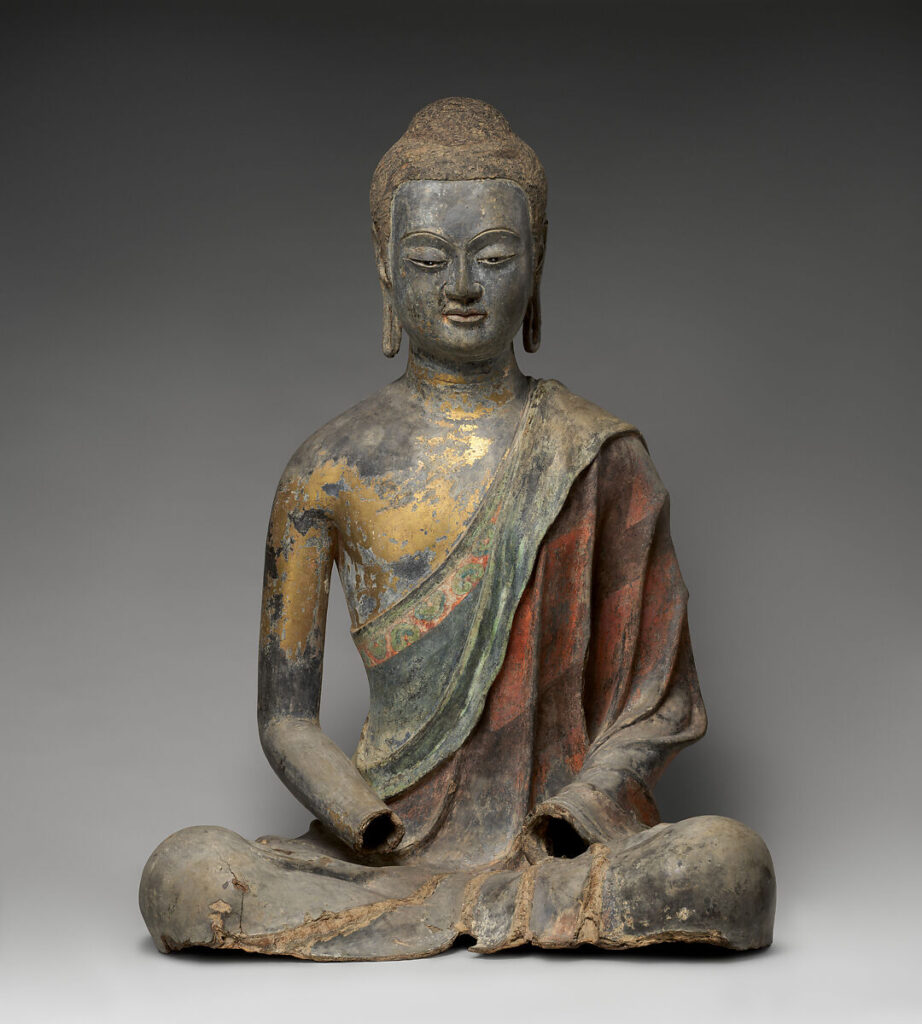
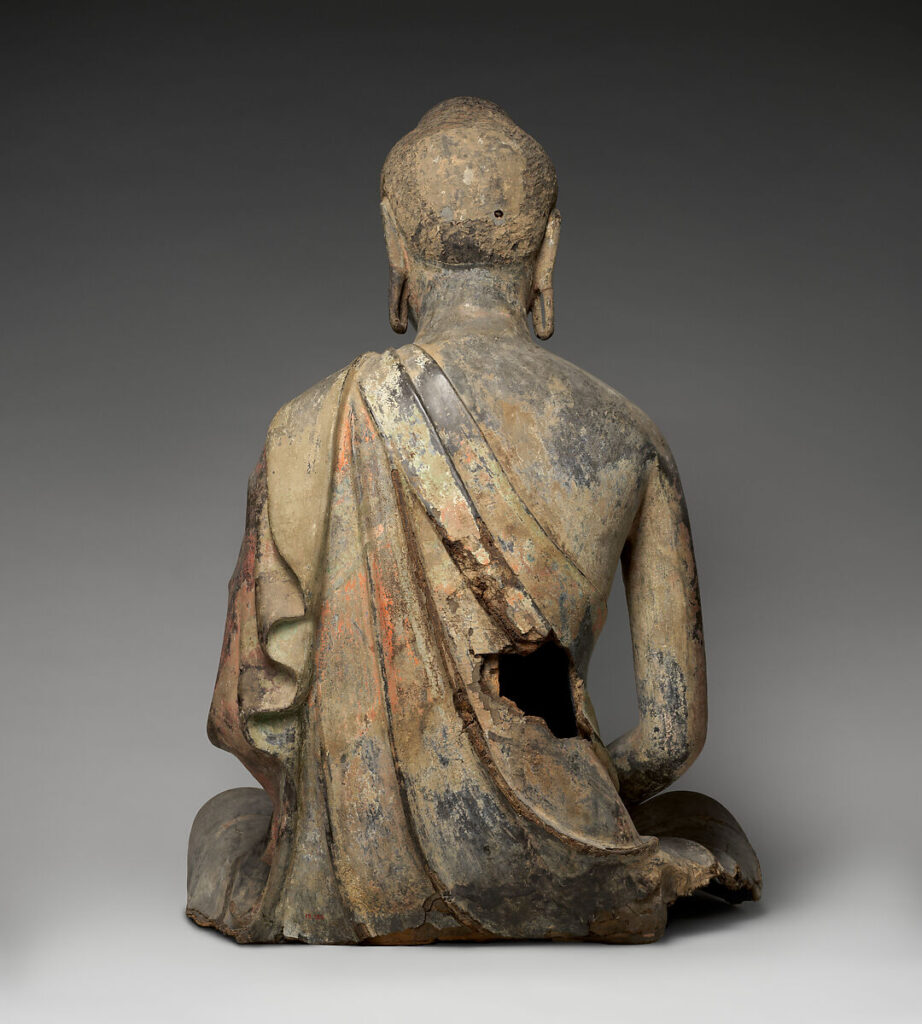
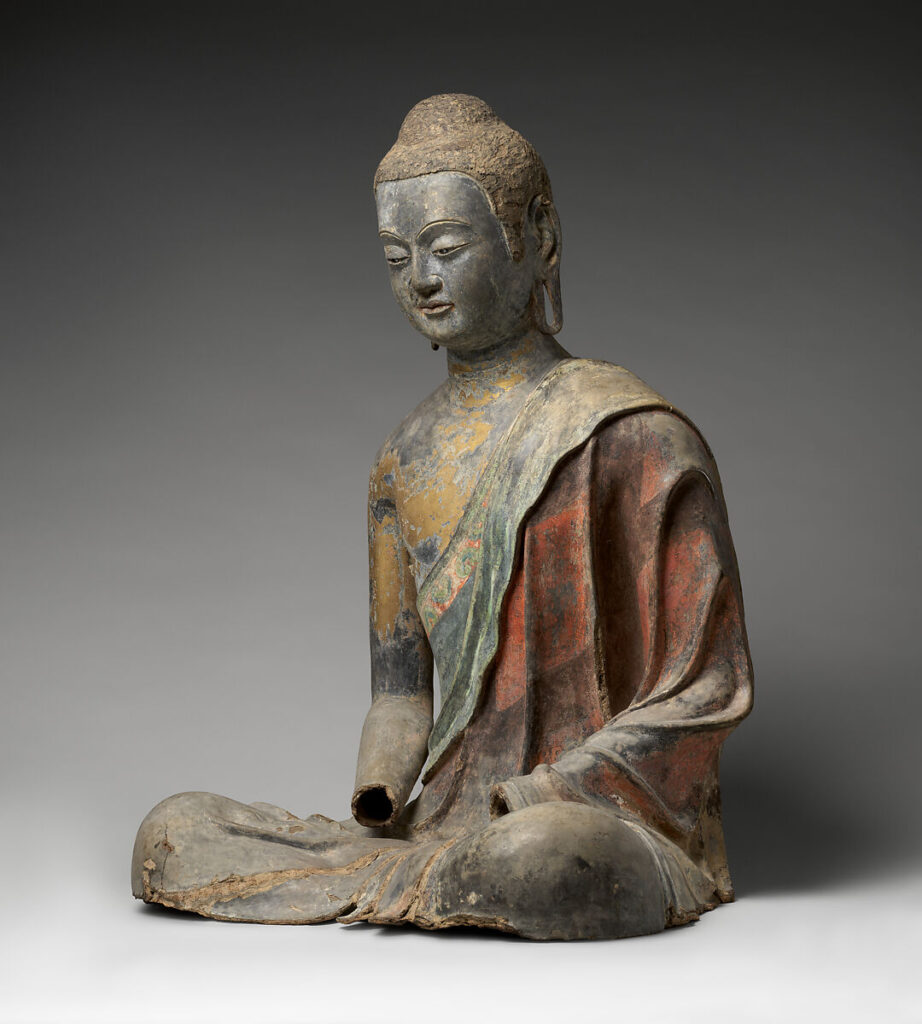
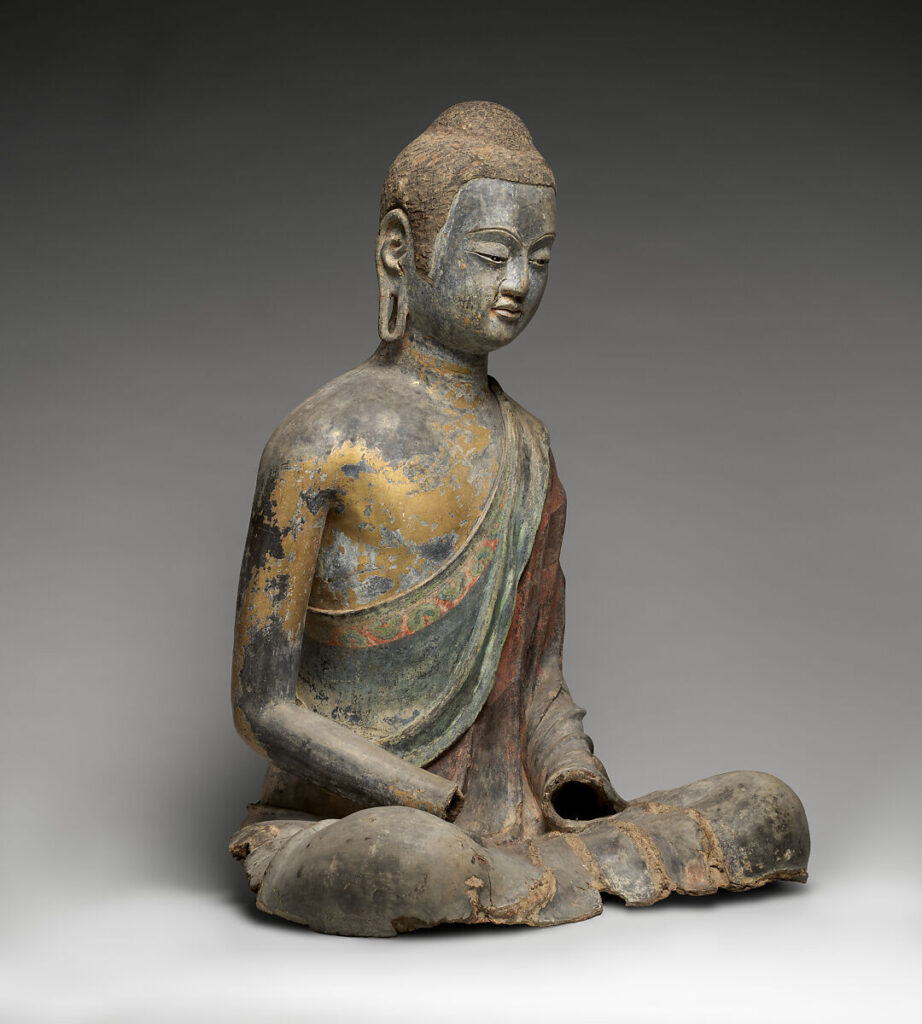
This piece titled Buddha, probably Amitabha, is thought to be a sculpture that represents Amitabha. Amitabha is known as a celestial Buddha who presides over his Western Paradise. Devotion to him became a major part of Chinese Buddhism starting in the 6th century. This statue was created using a dry-lacquering technique, meaning that a wooden core was covered with clay and then wrapped with many layers of cloth that had been soaked in lacquer (a toxic tree resin that hardens when exposed to oxygen). Devotion to this Buddha represents the goal of rebirth in Amitabha’s Pure Land.
Eli’s Observations:
The original pigment can still be very clearly seen along with different parts where the statue was gilded. Despite some damages (the bottom of the legs, the hands, and the back), this statue has remained mostly unharmed. These damages were most likely caused by weathering of the statue over time, but it is curious that the hands both got broken off in similar places, yet his earlobes still remain intact despite how thin they are. It is possible that some amount of human tampering caused this and if this was the case then the damage would most likely not be done by the people who excavated it, since the Asian facial features remain untouched.
