General Information:
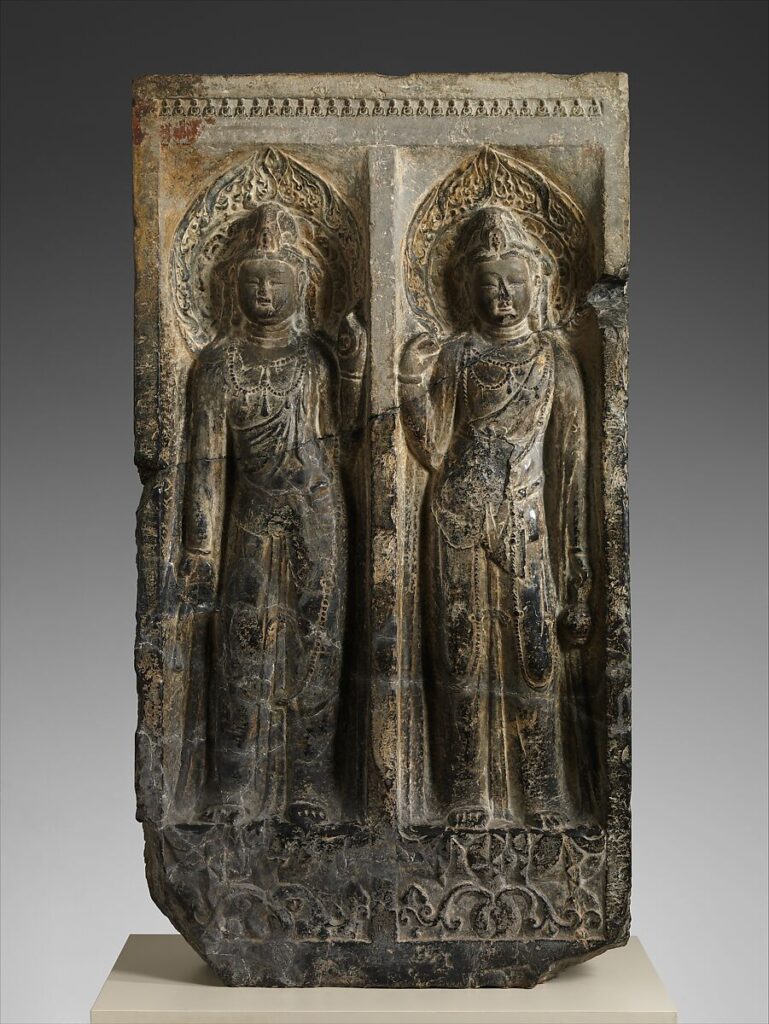
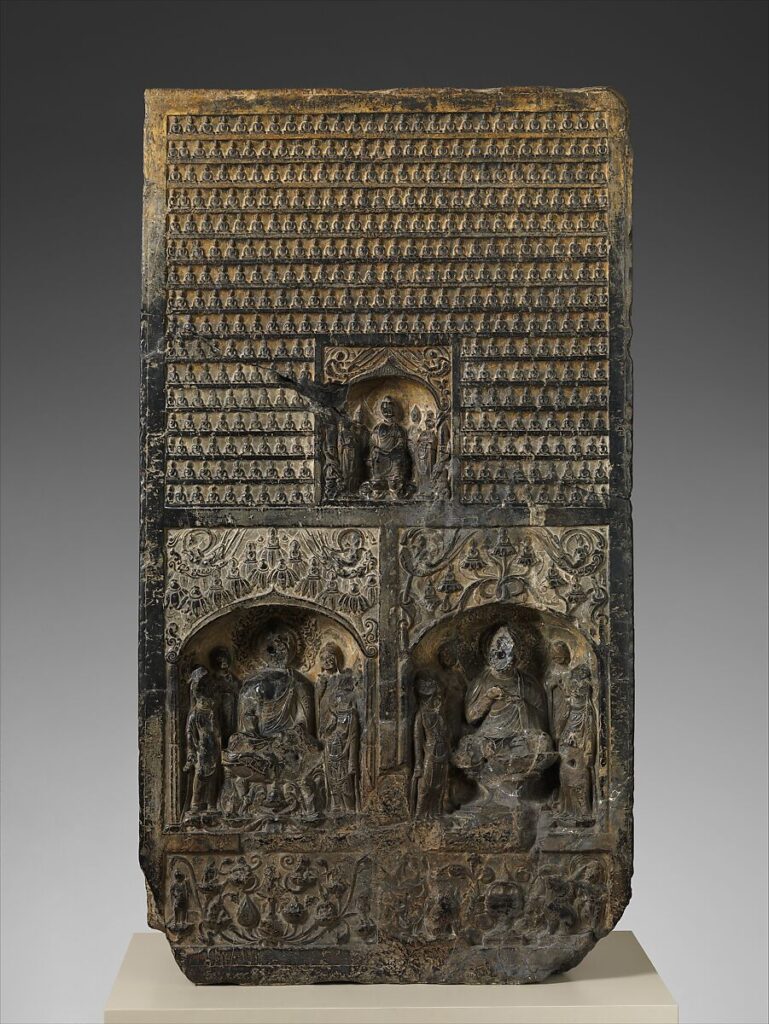
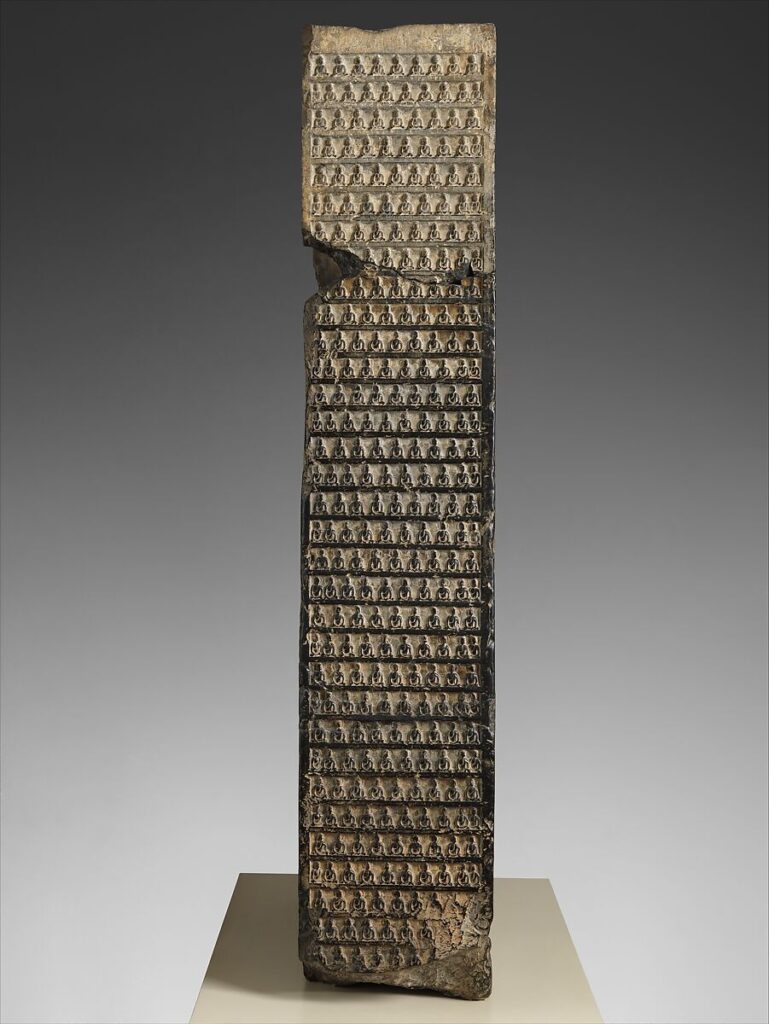
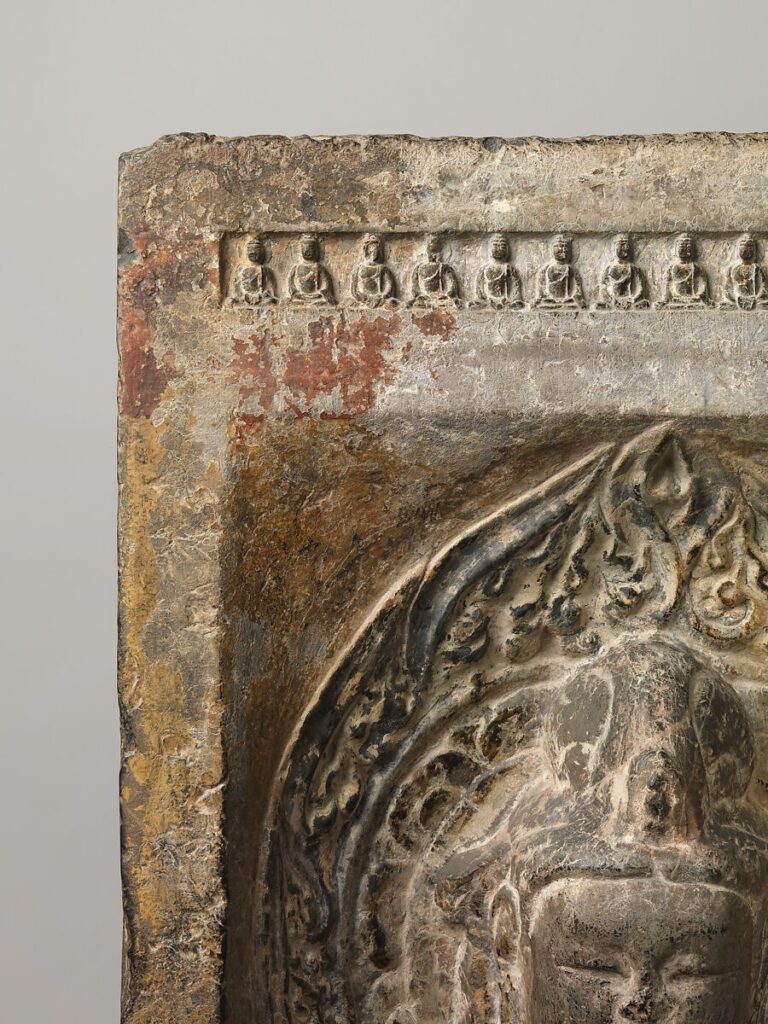
In this piece titled Stele with the Bodhisattvas Avalokiteshvara (Guanyin) and Mahasthamaprapta (Dashizi), there are five figures shown. On the front side has (from left to right) Mahasthamaprapta and Avalokiteshvara, who can be differentiated from the icon on their headdresses, a vase and a small Buddha, respectively. On the reverse are three Buddhas, one being Buddha Amitabha. This is known due to his frequent appearances alongside the Bodhisattvas. This piece is a sculpture made out of limestone and due to some minimal traces of pigment (see the top left of the front side) it can be assumed that this piece was once painted.
Eli’s Observations:
On closer inspection of this stele it can be seen that on the front the noses of the Bodhisattvas have been broken off, while on the reverse all of the faces of the Buddhas are gone. There may be many causes for this, but the two most likely causes are general weathering or racism during excavation. First off, since this piece was made in the mid- to late 7th century, some damage is expected (such as the giant crack on the center of the piece where it was once broken in two). The environment that it was originally found in was obviously unable to preserve the original pigmentation of the art, so these damages being because of time is very likely. On the other hand, many non-europeans artworks, such as these, are damaged during excavation by the architects. Usually features that are non-European get broken or scratched off to make these figures appear more white. This might explain why the Buddhas’ faces are broken off while their attendants’ faces lay largely intact.
